





Diagnosing patients
CKD-aP: much more than just an itch1
Key learning points:
- CKD-aP is defined as itching directly related to kidney disease and can vary in severity, be intermittent or persistent, and occur any time before, during or after dialysis1
- The burden your patients experience with itch can affect them both physically or emotionally. They may be struggling with symptoms of depression, poor sleep, and social isolation2–5
- The WI-NRS (Worse Itch-Numerical Rating Scale) is a simple 11-point scale that can be used to assess itch intensity
How to identify signs that patients may be experiencing CKD-aP
One method is to look out for any visible signs; itching and scratching is often bilaterally symmetrical, and can be localised or generalised6,7
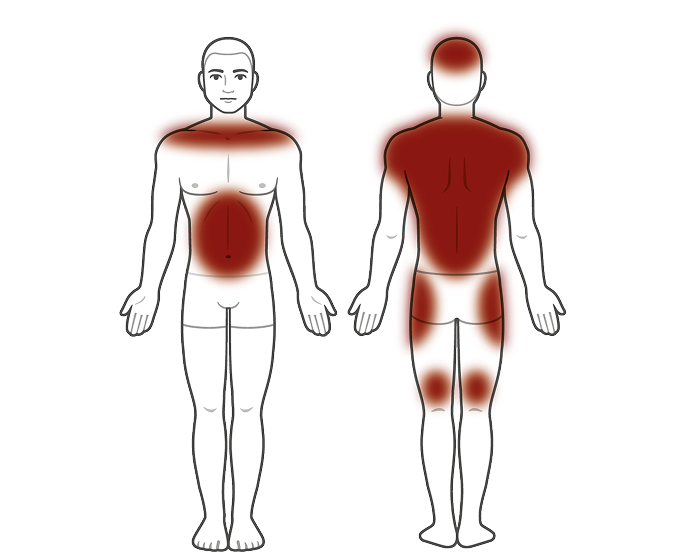
Generalised
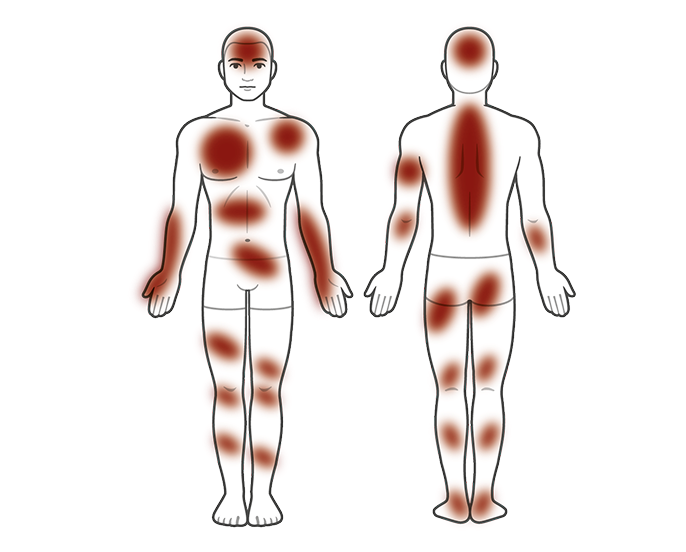
Localised
After performing a differential diagnosis and excluding other possible causes, you should consider itching in these patients to be related with CKD.1
Some patients may present with no visible signs of itch or scratching, which makes your conversations with them more important. Start with one simple question to get the answers you need from your patients: ‘How would you rate the worst itch you felt in the past 24 hours?’
WI-NRS assesses itch intensity7,8
Using a simple numerical rating scale called the WI-NRS scale can help to get the conversation started. This allows you to keep track of how your patients' treatments are working and help you to see if patients who began in the moderate-to-severe range of itch have had any improvements of their symptoms.
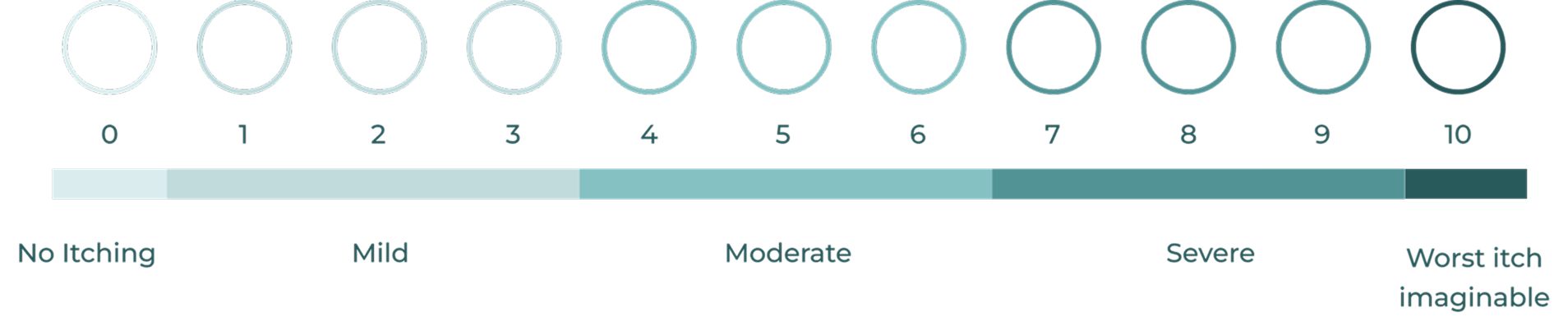
WI-NRS is a validated 11-point scale ranging from 0-10 where 0 represents 'no itching' and 10 'worst itch imaginable'7,8 The WI-NRS is based on a similar scale also validated for the measurement of pain8

References & footnotes

Footnotes
CKD, chronic kidney disease; CKD-aP, chronic kidney disease-associated pruritus; HCP, healthcare professional; WI-NRS, Worst Itch Intensity-Numerical Rating Scale.
References
- Verduzco HA & Shirazian S. Kidney Int Rep. 2020;5:1387-1402.
- Sukul N, Karaboyas A, et al. Kidney Med 2021;3(1):42-53 e41.
- Pisoni RL, et al. Nephrol Dial Transplant. 2006;21:3495-3505.
- Silverberg J, et al. Am J Clin Dermatol. 2018;19(5):759-769.
- Ibrahim M, et al. J Clin Diagn Res. 2016;10(3):WC01-WC05.
- Shirazian S, et al. Int J Nephrol Renovascular Dis. 2017;10:11-26.
- Mathur V, et al. Clin J Am Soc Nephrol. 2010;5:1410-1419.
- Phan NC, et al. Acta Derm Venereaol. 2012;92:502-7.
UK-DFK-2300055 (v2.0) | Date of preparation: June 2025

Diagnosing patients
CKD-aP: much more than just an itch1
Key learning points:
- CKD-aP is defined as itching directly related to kidney disease and can vary in severity, be intermittent or persistent, and occur any time before, during or after dialysis1
- The burden your patients experience with itch can affect them both physically or emotionally. They may be struggling with symptoms of depression, poor sleep, and social isolation2–5
- The WI-NRS (Worse Itch-Numerical Rating Scale) is a simple 11-point scale that can be used to assess itch intensity
How to identify signs that patients may be experiencing CKD-aP
One method is to look out for any visible signs; itching and scratching is often bilaterally symmetrical, and can be localised or generalised6,7
Generalised
Localised
After performing a differential diagnosis and excluding other possible causes, you should consider itching in these patients to be related with CKD.1
Some patients may present with no visible signs of itch or scratching, which makes your conversations with them more important. Start with one simple question to get the answers you need from your patients: ‘How would you rate the worst itch you felt in the past 24 hours?’
WI-NRS assesses itch intensity7,8
Using a simple numerical rating scale called the WI-NRS scale can help to get the conversation started. This allows you to keep track of how your patients' treatments are working and help you to see if patients who began in the moderate-to-severe range of itch have had any improvements of their symptoms.
WI-NRS is a validated 11-point scale ranging from 0-10 where 0 represents 'no itching' and 10 'worst itch imaginable'7,8 The WI-NRS is based on a similar scale also validated for the measurement of pain8
References & footnotes
Footnotes
CKD, chronic kidney disease; CKD-aP, chronic kidney disease-associated pruritus; HCP, healthcare professional; WI-NRS, Worst Itch Intensity-Numerical Rating Scale.
References
- Verduzco HA & Shirazian S. Kidney Int Rep. 2020;5:1387-1402.
- Sukul N, Karaboyas A, et al. Kidney Med 2021;3(1):42-53 e41.
- Pisoni RL, et al. Nephrol Dial Transplant. 2006;21:3495-3505.
- Silverberg J, et al. Am J Clin Dermatol. 2018;19(5):759-769.
- Ibrahim M, et al. J Clin Diagn Res. 2016;10(3):WC01-WC05.
- Shirazian S, et al. Int J Nephrol Renovascular Dis. 2017;10:11-26.
- Mathur V, et al. Clin J Am Soc Nephrol. 2010;5:1410-1419.
- Phan NC, et al. Acta Derm Venereaol. 2012;92:502-7.
UK-DFK-2300055 (v2.0) | Date of preparation: June 2025
Symptom burden
Look beneath the surface to the physical and mental repercussions of CKD-aP
Key learning points:
- CKD-aP has many consequences on patients' quality of life1–4
- Patients with moderate-to-severe CKD-aP have poor sleep, and significantly reduced physical and mental health-related quality of life (QoL)1–4
What is the impact of CKD-aP on patients?
The burden your patients experience with itch can affect them both physically and emotionally. They may be struggling with symptoms of depression, poor sleep, and social isolation.1–4

Depression

Poor sleep

Social isolation
In the Dialysis Outcomes and Practice Patterns Study (DOPPS), CKD-aP was associated with reduced sleep quality, reduced QoL and increased comorbidities1

Severe CKD-aP is associated with reduced sleep quality1
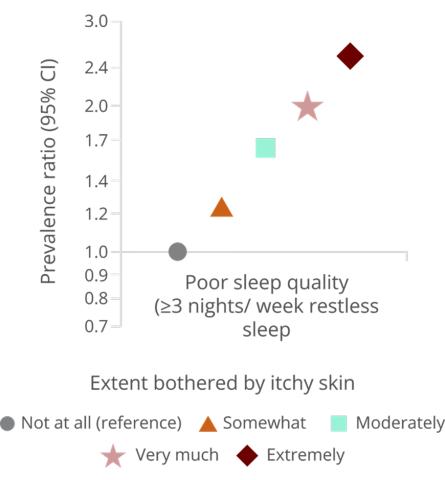
Severe CKD-aP is defined as patients 'very much bothered' and 'extremely bothered' by itch1
Overall, poor sleep quality (≥3 nights/week restless sleep) was reported by 32.1% of all eligible patients in DOPPS (n=7,211/22,464)1*
In patients extremely bothered by itch, the prevalence of poor sleep quality was over 2x greater than among patients not at all bothered by itch1
Adapted from Sukul N et al, 20201
*The population here includes all eligible patients irrespective of the extent to which they were bothered by itch.1
Increasing pruritus severity is strongly associated with worse self-reported health-related quality of life (HR-QoL)
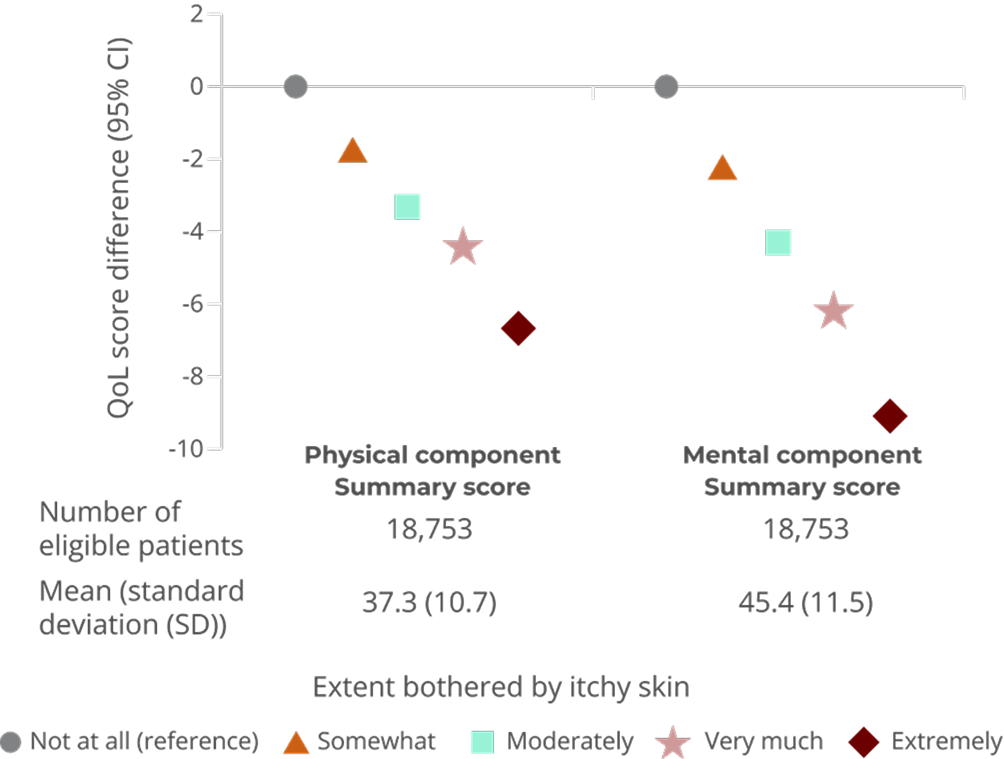
In DOPPS, Mental and Physical Component Summary scores were derived from the 12-item Short Form Health Survey, a subset of the KDQoL-36.1
Adapted from Sukul N et al, 20201
In DOPPS:1
- Rates of all-cause, cardiovascular- and infection-related deaths were higher for patients extremely bothered by pruritus vs those not at all bothered by pruritus1
- Primary clinical outcome; HR, 1.24 vs no bothersome itch; 95% CI 1.08, 1.41; Total N of patients with event across all severities of itch 11,204/23,2641
- HR for patients extremely bothered by itch for CV-related mortality was 1.29 (95% CI, 1.06–1.57, N patients with event = 3,060/23,264). HR for infection-related mortality was 1.44 (95% CI, 1.05–1.96, N events = 2,215/23,264)1
- CV-related mortality may be associated with higher levels of inflammation in these patients or possibly the prevalence of heart failure
- Infection-related mortality may relate to immune system pathology or central venous catheter presence
References & footnotes
Footnotes
CI, confidence interval; CKD, chronic kidney disease; CKD-aP, chronic kidney disease-associated prutitus; DOPPS, Dialysis Outcomes and Practice Patterns Study; HD, haemodialysis; HR, hazard ratio; HR-QoL, health-related quality of life; KDQoL, kidney disease quality of life; PGI-C, patient global impression of change, PGI-S, patient global impression of worst itch severity; PRO, patient-reported outcome; QoL, quality of life.
References
- Sukul N, Karaboyas A, et al. Kidney Med 2021;3(1):42-53 e41.
- Pisoni RL, et al. Nephrol Dial Transplant. 2006;21:3495-3505.
- Silverberg J, et al. Am J Clin Dermatol. 2018;19(5):759-769.
- Ibrahim M, et al. J Clin Diagn Res. 2016;10(3):WC01-WC05.
UK-DFK-2300056 (v2.0) | Date of preparation: June 2025

Prevalence
48% of all UK patients on HD may be moderately-to-severely bothered by itch1
Key learning points:
- CKD-aP is under-reported by patients and under-recognised by HCPs2
- Routinely asking your patients "DO YOU ITCH?" at their HD sessions is a good starting point to actively support your patients in getting the crucial diagnosis and treatment they need
There is a need to increase awareness of CKD-aP among both HCPs and patients
In the Dialysis Outcomes and Practice Patterns Study (DOPPS):

48%
of all UK patients were moderately-to-severely bothered by itch (n=654/1,363)1
However:

of consultant nephrologists underestimated the prevalence of CKD‑aP in dialysis units (n=233/337)2

of patients with CKD-aP who were bothered by itch did not report it to a HCP (n=631/2,522)2
Why is CKD-aP under-recognised and under-reported?

PATIENTS UNAWARE
OR RESIGNED
Some patients do not understand the link between CKD and itch; others are resigned to suffering from itch3

HIGH BURDEN,
LOW PRIORITY
Itch is not considered a priority symptom in advanced CKD, so is often overlooked during consultations3

CONSULTATION TIME
IS SHORT
With limited consultation times, patients and nephrologists may not get the chance to discuss itch3
Routinely asking patients "DO YOU ITCH?" at their HD sessions is a good starting point to actively support your patients in getting the crucial diagnosis and treatment they need
References & footnotes
Footnotes
CKD, chronic kidney disease; CKD-aP, chronic kidney disease-associated pruritus; DOPPS, Dialysis Outcomes and Practice Patterns Study; HCP, healthcare professional; HD, haemodialysis; KDQoL, kidney disease related quality of life.
References
- Sukul N, Karaboyas A, et al. Kidney Med 2021;3(1):42–53 e41.
- Rayner H C, Larkina M, et al. Clin J Am Soc Nephrol 2017;12(12):2000–2007 (+ suppl).
- Aresi G, et al. J Pain Symptom Manage. 2019;58(4):578-586.
UK-DFK-2300057 (v2.0) | Date of preparation: June 2025

Pathogenesis
What are the causes of CKD-aP?
Key learning points:
- There are several theories as to the cause of CKD-aP, including peripheral neuropathy, imbalance between mu-opioid receptors (MORs) and kappa-opioid receptors (KORs) and inflammation1
- Whilst dialysis optimisation is important, the Dialysis Outcomes and Practice Patterns Study (DOPPS) revealed no association between CKD-aP and lab values of uraemic toxins2
The pathogenesis of CKD-aP may be multifactorial, with several theories as to its cause:1
Theory one: CKD-aP could be caused by imbalanced MOR and KOR receptor activity1

- In patients with CKD-aP, KORs are under-expressed, resulting in an imbalance of receptor activity that favours MOR activation3,4
- An imbalance between KOR and MOR expression may contribute to the pathophysiology of CKD-aP4
Theory two: CKD-aP could be caused by peripheral neuropathy1

- There is a high prevalence of peripheral sensorimotor neuropathy and dysautonomia among patients on dialysis, and this may explain the itching
- Dialysis patients with paraesthesia and restless leg syndrome more frequently have CKD-aP
Theory three: CKD-aP could be caused by inflammation1

- Increased Th1 cells, serum IL-6 and CRP have been reported among patients with CKD-aP vs patients without CKD-aP4,5
- IL-2 and IL-31 have also been associated with CKD-aP6,7
Theory four: CKD-aP could be caused by implicated toxins1

- CKD-aP has been associated with underdialysis and higher calcium, phosphorus and parathyroid hormone levels
Optimisation of dialysis and control of serum calcium and phosphorus may not be sufficient to fully control the symptoms of CKD-aP1,2,8,9
Whilst dialysis optimisation is important, the Dialysis Outcomes and Practice Patterns Study (DOPPS) revealed no association between CKD-aP and lab values of uraemic toxins2
CKD-related laboratory values according to CKD-aP severity2
No association was observed between CKD-aP and CKD-related laboratory values in DOPPS (N=6,256)2
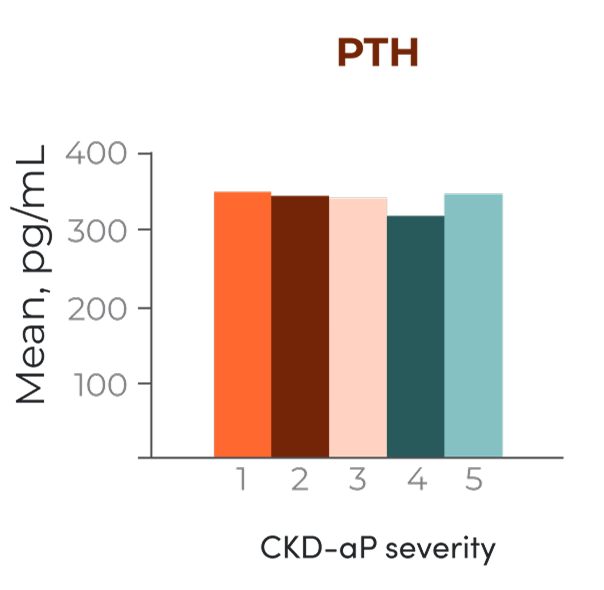
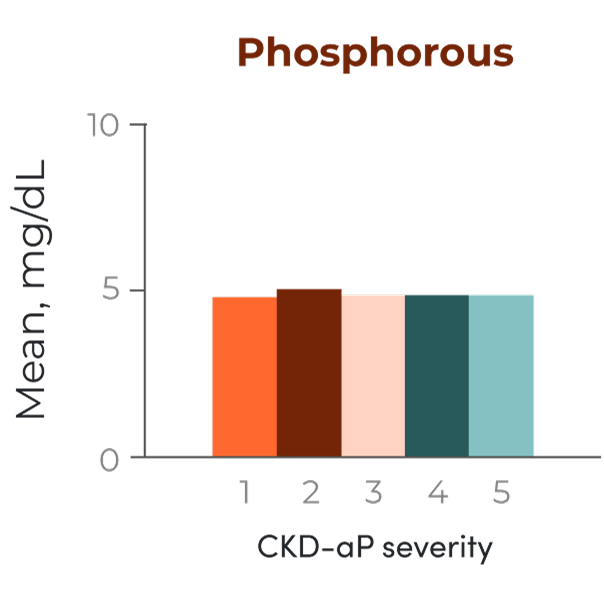
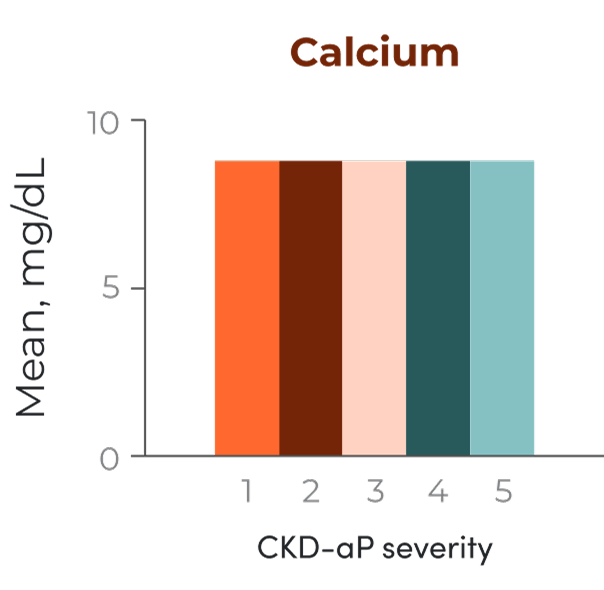
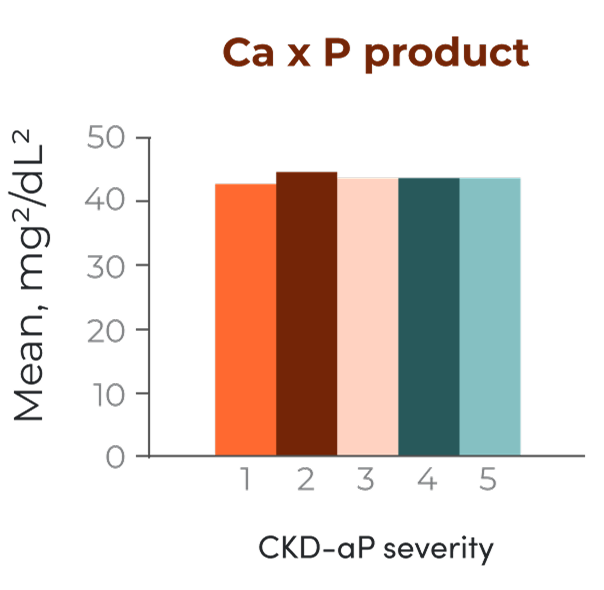
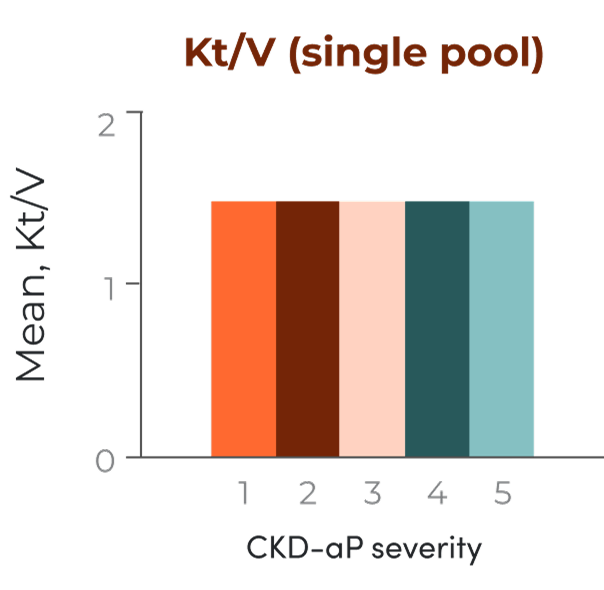
CKD-aP severity based on response to the question "To what extent were you bothered by itchy skin during the past 4 weeks?":
1 = not at all (n=2,111);
2 = somewhat (n=1,840);
3 = moderately (n=1,188);
4 = very much (n=692); 5 = extremely (n=425).
Adapted from Rayner HC, et al. 20173
Watch experts discuss the theories behind CKD-aP
References & footnotes
Footnotes
Ca, Calcium; Ca x P, calcium x phosphorus; CKD, chronic kidney disease; CKD-aP, chronic kidney disease-associated pruritus; CRP, C‑reactive protein; DOPPS, Dialysis Outcomes and Practice Patterns Study; HD, haemodialysis; IL, interleukin; KOR, kappa-opioid receptors; MOR, mu-opioid receptors; P, Phosphorus; PTH, parathyroid hormone; Th1, type 1 T helper.
References
- Verduzco HA & Shirazian S. Kidney Int Rep. 2020;5:1387-1402.
- Rayner HC, et al. Clin J Am Soc Nephrol. 2019;12:2000-2007. (+ suppl).
- Wieczorek A, et al. J Eur Acad Dermatol Venereol. 2020;34:2368-2372.
- Mettang T & Kremer AE. Kidney Int. 2015;87:685-691.
- Kimmel M, et al. Nephrol Dial Transplant. 2006;21:749-755.
- Fallahzadeh MK, et al. Nephrol Dial Transplant. 2011;25:3338-3344.
- Ko MJ, et al. J Am Acad Dermatol. 2014;71:1151-1159.e1.
- Shirazian S, et al. Int J Nephrol Renovascular Dis. 2017;10:11-26.
- Millington GWM, et al. Br J Dermatol. 2018;178(1):34-60.
UK-DFK-2400162 | Date of preparation: June 2025

Adverse events should be reported. Reporting forms and information for the United Kingdom can be found at https://yellowcard.mhra.gov.uk/ or search for MHRA Yellow Card in the Google Play or Apple App Store. Adverse events should also be reported to Vifor Fresenius Medical Care Renal Pharma, care of Vifor Pharma Ltd.
Tel: +44 1276 853633. E-mail: MedicalInfo_UK@viforpharma.com.